No Bridge Over Troubled Waters

Walking along the South Bank with my daughters, I mused on how much history and how many iconic landmarks were contained within a few short yards. When I decided to write a flash fiction piece, this little story (and the linkages) just seemed to pop into my head.


They agreed to meet at London Bridge and make another attempt to cross the gulf that separated them.

Walking along the South Bank, they made slow progress. The same arguments were replayed; until, outside The Globe, she responded dramatically – as she always did – leading to a public exhibition of tears and tantrums on the steps of The Tate.

He accused her of being theatrical and she shed more tears as they walked past The National and accused him of orchestrating their disharmony – in full view of the queue outside the Royal Festival Hall.

Eventually she managed to govern her emotions, but not until they reached the facade of the old County Hall. By then it was too late. Things had moved on, he said. He decreed they would never see eye-to-eye if they kept circling round in the same old way. As his opposition hardened, she came to the realisation there were some bridges that could not be mended.

At Westminster Bridge they agreed to stop battling against the tide. The time for negotiation had passed.

By unanimous decision, on reaching Parliament Square, they elected to go their separate ways.


Here is the walk:


To Flashback or Not to Flashback

Personally, as a reader, I dislike the use of flashbacks. If the past was so important, why isn’t the story set then? If the past was not so important, why do I have to read about it?

On the Writer Unboxed blog, Jenna Blum advises avoiding flashbacks.

If what happened to the character in the past is that important, why not extract it and expand it so it becomes a consistent, reliable part of the book’s structure, instead of a temporarily distracting time bubble? Conversely: if the scene isn’t that important, why not condense it to a memory?

Personally, as a reader, I dislike the use of flashbacks. I find them disorienting and confusing. If the past was so important, why isn’t the story set then? If the past was not so important, why do I have to read about it?

This is one reason I found On Chesil Beach (by Ian McEwan) frustrating to read.

I have just finished Waterworld, by Graham Swift. A great book – BUT, I struggled to follow the various time threads. Not only does he tell his own personal history using jumps in time, but he interweaves the history of his family and history of the fictional fen location in which the book is set. In the end, he brought all the interwoven threads to a satisfactory merger and it came all together nicely at the end. However, with each dislocation in time, I felt a dislocation from the story (if that makes sense!). For me, it would have been a more compelling read without the distraction of the jumps, at least within his own history.

Just my opinion. Maybe I am a lazy reader?

Yippee – I have been accepted

“Why don’t you just write? You don’t need to do a course. Just write.”
I can write on my own; and I do. But how can I know what is good and bad. I am too close to the process

Photo of child doing some creative writingFollowing my disappointment with Nottingham University, I reappraised my options.

Had I set my sights too high applying for an MA in creative writing? Yes, almost certainly.

My husband said, “Why don’t you just write? You don’t need to do a course. Just write.”

But I feel that I do need a course. And I tried to explain to him why.

  • I need guidance. I can write on my own; and I do. But how can I know what is good and bad. I am too close to the process.
  • I need structure. Too often this happens; I sit down to write and get distracted – check Twitter and follow-up a few tweets, check my emails, look at my blogs, look at other people’s blogs, get onto Facebook, play Zuma Blitz …. You get the picture?
  • I want someone else to read my work with a critical eye and offer advice and suggestions. I want an audience.

So, what did I do since my last rejection?

  1. I applied to do a 12 week Creative Writing module (Start writing fiction) at the Open University
  2. I registered for a couple of days ‘Writing Great Short Stories’ course at Knuston Hall
  3. I applied to Birkbeck University, part of the University of London, for a place on their BA in creative writing

My interview at Birkbeck took place last Monday. I had 15 minutes to persuade two very young lecturers that I was a suitable candidate. They sent me an email on Wednesday, informing me I had been accepted. Yippee. Can’t wait!

Ray Bradbury writes about writing.

Farewell Summer ends with an Afterword, in which Ray Bradbury writes about his approach to writing. Fascinating stuff. I have just selected a few nuggets. If you want more, you will have to read the book yourself.

Ruth Livingstone blog post.
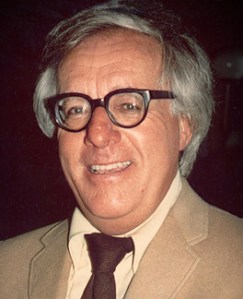
Photo of Ray Bradbury by Alan Light
I have just finished reading Farewell Summer, by the great master, Ray Bradbury.

(If you are interested in my thoughts about this novel, read my review on Ruthless Reading)

The book ends with an Afterword, in which Ray Bradbury writes about his approach to writing. For me, this was fascinating stuff. I have just selected a few nuggets from the Afterword. If you want more, you will have to Continue reading “Ray Bradbury writes about writing.”

Books I am reading this week

It would be really sad to be learning from a writer whose books I don’t actually like. Therefore, it was a big relief to find that I enjoyed Holly’s book immensely and will be trying to track down more.

Have spent the past couple of weeks reading books avidly, instead of writing. I have tried to choose books from different genres, revisiting some old friends and reappraising some new ones.

fiction books I am reading Fiction:

  1. Talyn, by Holly Lisle.

    I follow Holly Lisle on her blog and I am working my way through one of her online writing courses ‘Create a Plot Clinic’. Deciding it was high time I actually read one of her books, and unable to find copies in my local bookshops, I ordered Talyn from my local library (cost me 25p). It would be really sad to be learning from a writer whose books I don’t actually like. Therefore, it was a big relief to find that I enjoyed Holly’s book immensely and will be trying to track down more.
    Visit my Ruthless Readings site to see my blog on Talyn, by Holly Lisle

  2. Farewell Summer, by Ray Bradbury

    Took me a while to get into this book. I normally love Ray Bradbury – both his science fiction and non-SF books – and I count his Dandelion Wine as one of the finest books I have ever read. I found Farewell Summer hard going. But, in the final few chapters, this book finally came alive for me – so alive, I started it again and read it through from the beginning. (This is the first time I have ever read a book through, twice, all in one sitting). Read my review here.

  3. Black Dogs, by Ian McEwan

    Being one of our most respected authors, I was disappointed in the first, and only, Ian McEwan book I have ever read – On Chesil Beach. There is a certain dis-engaged style to his writing that I have difficulty with. I decided to give him another try. And I have to report that I enjoyed Black Dogs.

  4. About to start Minority Report, by Philip K. Dick (actually this is one of a collection of short stories, I believe)

    Philip K. Dick is a great science fiction writer. I had never heard of Minority Report until the film came out. And it was a great film. I hope the book lives up to my expectations. Finished the book – actually a collection of short stories – and I saved Minority report to last. What did I think of it? Read my review of Minority Report on my Ruthless Reading blog.

  5. Non-fiction Reading: The Checklist Manifesto by Atul Gawande – compelling writing by a surgeon, extolling the virtues of checklists, to improve the safety of medical procedures.